Satellites
Asian Artists’ Fund
2026
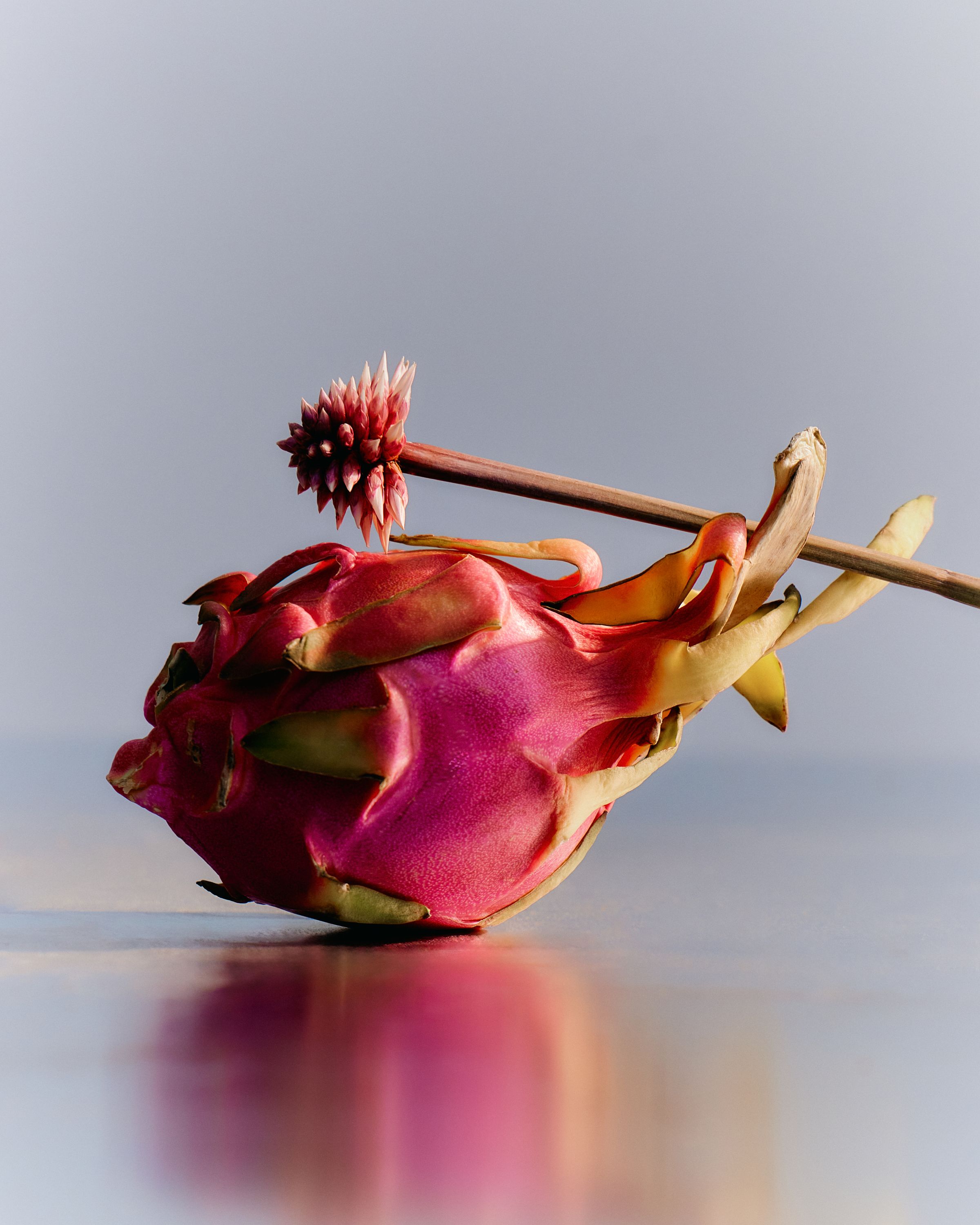
The Asian Artists’ Fund is a suite of grants and residencies designed to support Asian artists in Tāmaki Makaurau and Te Tai Tokerau.

Administered by Satellites and made possible through the support of Foundation North, Creative New Zealand and Auckland Council, the fund is a direct response to the systemic underrepresentation of Asian practitioners in Aotearoa.

Unfortunately, this will be the final year that the Asian Artists’ Fund is offered in its current form. We thank everybody who has contributed to the development of the Fund over the past five years.

This year, we have $700,000 to distribute to artists.
Key Funding Dates
- Opens: Tue 18 Aug 2026 — 12.01am
- Online Information Session: Thur 20 Aug 2026 — 5-6pm — Watch recording here
- In-person Information Session: Wed 26 Aug 2026 — 6-7pm
- Closes: Thur 17 Sep 2026 — 11.59pm
- Results due: Fri 20 Nov 2026
About the fund
The Asian Artists’ Fund was established in 2022 to address funding inequalities in Aotearoa for artists of Asian descent.
Since its launch, the fund has undergone continual evolution, shaped by ongoing feedback from Asian arts practitioners. At its heart, it reaches towards the three aspirations outlined in Enter The Multiverse – Building a Stronger Sector For Our Asian Arts Practitioners:
- Mid-career practitioners are leaders both in Aotearoa and internationally
- Early-career practitioners have culturally meaningful opportunities to develop their practice
- Asian diaspora artists develop a distinctive voice within Aotearoa
Underpinning the fund is an acknowledgement of the place of Asian peoples in Aotearoa in relation to Te Tiriti o Waitangi and our nation’s bicultural foundation. Understanding the place of Asian New Zealanders goes hand in hand with understanding our roles and responsibilities as Tiriti partners since Te Tiriti o Waitangi is an agreement between Tangata Whenua and Tangata Tiriti. In this context, we define Tangata Tiriti as inclusive of all those who call Aotearoa home – Pākehā and Tauiwi.
—
We offer a range of residencies and grants for practitioners at all stages of their career and artistic exploration.
Please note: Only one application per person or group can be made to the Asian Artists’ Fund. This supports our internal capacity, allowing us to allocate as much of the budget as possible to fund as many artists as possible. If you are unsure which fund is best for you, speak to one of our advisors.
Funding Streams
Creative Fellowship

Creative Fellowship A stipend for creative practitioners who are mid-career and beyond to develop new ideas, new work and new approaches in their practice. In particular, we see this as an opportunity for artists to take risks they might not otherwise be able to take — where failure is, in fact, an option.
We will be awarding up to four fellowships with a stipend of $60,000 each.
Professional Development

Professional Development For practitioners to undertake development activities that benefit their careers. This might include mentorship, workshops, or documenting and archiving their own work.
We will be awarding up to four grants of up to $5,000 each.
AAF Visual Arts Residency

AAF Visual Arts Residency A residency for a visual artist to experiment, explore, and develop new work.
The artist receives $10,000 and 12 weeks of shared studio space at Te Tuhi.
AAF Dance and Movement Residency

AAF Dance and Movement Residency A residency for a dance or movement artist to experiment, explore, and develop new work.
The artist receives $10,000 and four weeks of studio space at Te Oro or an alternative Auckland Council venue (noting this time does not have to be consecutive).
Creative Projects

Creative Projects To support the development or presentation (or both) of a creative project.
We will be awarding up to 11 grants of up to $35,000 each.
AAF Writers Residency

AAF Writers Residency A residency for an artist developing a text of any kind — poetry, fiction, non-fiction, comedy, theatre.
The artist receives $10,000 and six months’ access to the co-working space at Samoa House Library.
AAF Music and Sound Art Residency

AAF Music and Sound Art Residency A residency for a music or sound artist to experiment, explore, and develop new work.
The artist receives $10,000 and four weeks of studio space at Te Oro or an alternative Auckland Council venue (noting this time does not have to be consecutive).
AAF Performance Art Residency

AAF Performance Art Residency A residency for a performance artist or live artist to experiment, explore, and develop new work.
The artist receives $10,000 and four weeks of studio space at Silo Theatre (noting this time does not have to be consecutive and will need to work around rehearsal dates for Silo shows) and curatorial conversations with the Artspace Aotearoa team.
Case Studies
Case Study: Creative Fellowship

Xin Ji and Tony Guo, Space Drag, 2026
Photo: Jiaqi Tang
For dance artist Xin Ji, the Creative Fellowship has given him “time, space, and trust to dream more deeply inside my practice” — offering him the rare freedom to follow artistic instincts he would not usually have the capacity to pursue.
This freedom has led to a collaboration with painter Tony Guo and the development of Space Drag, a performance that was presented in part at Auckland Art Gallery in June 2026. “Let’s be honest,” he says. “If I were given the same amount of funding, but with a festival to premiere work, not in a thousand years would I approach Tony. The pressure’s on, and I have to be reasonable about how I’m going to use that opportunity.” That’s why the Fellowship has been so pivotal. Without it, “I don’t think I would ever have been brave enough to even think about challenging the form.”
Case Study: AAF Dance and Movement Residency

Weichu Huang, Lulu Qiu and Sasha Matsumoto, Don’t Cry Baobei, 2026
Photo: Abigail Dell’Avo
This year’s Dance and Movement Artists in Residence — Weichu Huang, Lulu Qiu and Sasha Matsumoto — studied together at Unitec, graduating during the lockdowns, but had never made a work together. They had also never made a full-length work before, and the residency offered the opportunity to not only test a new collaboration, but to develop their choreographic voice.
Over four weeks at Te Oro, mentored by choreographer Xin Ji, they developed Don’t Cry Baobei, a work exploring the experiences of immigrant daughterhood while growing up in a digital age. Physical closeness and care were explored as a paradoxical allegory for parasocial relationships and technologically driven disconnection.
“I’ve been in lots of other people’s ideas, so it was exciting to ask: what do we want to explore,” says Lulu. Weichu found the experience opened their practice: “I feel like new potentials have opened in my thought pathways, in terms of where I can go creatively.”
For all three, the residency offered something early-career artists rarely get: time without pressure to produce. “It’s special to have time for curiosity and play,” Lulu reflects. “That’s the biggest thing I’ve taken away.”
Case Study: Creative Project

Vinesh Kumaran, Jaysh, 2026
Photographer Vinesh Kumaran had been dreaming up Gathered & Grown Here — a series of large-scale portraits of stall owners at the Māngere Markets — for more than a year when he received a Creative Project grant.
Developed over six months, the resulting exhibition evoked the markets themselves, with sixteen portraits hung from rows of gazebos, accompanied by a short film featuring interviews with each stall owner.
“It was validating,” he says. The grant gave Vinesh the encouragement to secure further partnerships and funding from other sources. Most importantly: “It gave me the time to build those relationships.” In return, he has gifted each portrait back to the stall owners — with many continuing to display his work at the markets today.
Frequently Asked Questions
Who can apply?
Artists, practitioners, and collectives based in Tāmaki Makaurau and Te Tai Tokerau (or whose project benefits those within this geographical region) who identify as Asian can apply.
You or a project partner must also be a New Zealand citizen or permanent resident.
Please note: only one application per person or group can be made to the Asian Artists’ Fund.
What is an ‘Asian artist’?
Your work may draw on traditional Asian art forms and ancestral practices, but this is not necessary: the fund is for artists who identify as having Asian whakapapa, and the way this manifests in your creative work is for you to determine.
This fund places a special priority on practitioners seeking to build a professional creative career, in recognition of the resourcing difficulties being experienced across the arts, culture, and creative sector.
Can I apply if I’m a student?
You can apply if you are a student, provided the project or activity you are applying for is separate from your coursework and not part of your academic programme. We cannot fund core education resources or activities that form part of your curriculum. If you’re unsure, speak to one of our Advisors before applying.
Can my project involve collaborators who are not of Asian descent?
Yes. The fund is open to projects that involve non-Asian collaborators. Eligibility is based on the lead applicant(s), not the full team. At least one applicant must identify as a person of Asian descent.
How much should I apply for?
The Asian Artists’ Fund believes in fully funding a project or not at all — we believe that partially funding projects contributes to unsustainability in the arts and cultural sector.
When putting together your budget, we encourage you to present costings that ensure everybody is paid fairly according to Creative New Zealand’s remuneration policy, in which they outline, “Our minimum pay rate is $30 per hour, and we expect people with more skills and experience to be paid above this rate.” We also encourage you to consider this provocation from practitioner Jo Randerson: “I refuse to be on any more projects where we pay a projector more to be in the room than a live person.”
Can I receive this grant alongside other funding?
Yes. We encourage artists to seek co-investment from other sources where possible, and receiving funding from CNZ or another funder does not disqualify you. However, you cannot apply funding from the Asian Artists’ Fund toward the same phase of activity that has already been funded by another source.
What is eligible for funding?
We support an expansive range of art forms, including performance (theatre, movement, dance, live art), music, visual arts, community arts and literature.
We cannot fund:
- International travel.
- Academic research or tertiary study.
- Game design, fashion design and commercial design.
- Feature films, short films and film/screen development activities.
- The same phase of activity which has already been funded by a Creative New Zealand Grant or an Asian Artists’ Fund grant. i.e. if you have been funded for a development phase of a project via these funds, you cannot apply for more development costs for the same project. You are able to apply for a different phase, i.e. presentation of the project.
- Activities that are the responsibility of other government agencies.
- Core education resources and activities that are part of the curriculum and course of study in New Zealand, including early learning, school and further education.
- Purchase of capital items (the purchase or improvement of long-term assets — IRD defines this as $1,000 or higher), renovating or buying buildings, or restoring marae.
- Activities that are part of the core business of a Tertiary Education Organisation (TEO), Territorial Local Authority (TLA) or Council Controlled Organisation (CCO).
For more details, see Foundation North’s exclusions list and Creative New Zealand’s exclusions list.
What is the difference between an early-career and mid-career artist?
We recognise that these distinctions are subjective and can differ across art forms as well as within marginalised communities.
We are making this distinction to manage artists’ expectations when applying: the Creative Fellowship fund will prioritise more senior practitioners, and — in response — we will make special considerations for early-career practitioners within the Creative Project stream. This aligns with our aspirations to support mid-career practitioners in becoming leaders in their fields or within their communities, and to ensure early-career practitioners have culturally meaningful opportunities to develop their practice.
For the purposes of this fund, we are defining mid-career as outlined below. This encompasses anyone who is mid-career or beyond. Anyone who feels they are not at this stage in their career would be considered early-career.
A mid-career artist relates to somebody who:
- Identifies as a mid-career artist.
- Has consistently achieved the successful public presentation of critically acclaimed work, events or development programmes (e.g. a workshop series, mentoring programme) in an area (or areas) of arts practice across their career.
- Has endorsement and support from at least two peers or experts in their area of arts practice, who acknowledge their contribution to their area of arts practice as impactful or influential within Aotearoa; and/or
- Has achieved recognition or awards for their contribution to their arts practice; this could include, but is not limited to, an arts laureate, a New Year’s Honour, or domestic or international prizes. This is not necessary, however, as we recognise the lack of Asian representation across many of these awards in Aotearoa.
Can I submit my application in another language?
You are welcome to include other languages in any part of your application, and we will ensure it is assessed with appropriate cultural understanding.
Will I receive feedback if I’m unsuccessful?
Unfortunately, due to resourcing constraints, we are unable to offer feedback on individual applications this year. However, we will be offering broader feedback on the fund overall and on key themes the assessors observed.
What if my project changes after I receive funding?
This happens. If your project changes significantly after you’ve been funded — for example, a key collaborator drops out, your timeline shifts, or your budget needs to be restructured — please get in touch with us as early as possible at asianartistfund@foundationnorth.org.nz. Most variations can be accommodated with a quick conversation. We ask that you contact us before making any major changes rather than after the fact.
Why is the focus on Tāmaki Makaurau and Te Tai Tokerau?
Foundation North is a Community Trust for the benefit of communities in Auckland and Northland. Please see its operating boundaries if you are unsure whether you are eligible. Projects from applicants outside these boundaries are ineligible for funding unless the project is directly delivered or directly impacts the Auckland and Northland regions.
Although the community aspiration has always been for this fund to extend nationally, without additional partners, we are not able to offer this in 2026.
Who can’t apply?
Organisations supported by the Creative New Zealand Toi Uru Kahikatea or Toi Tōtara Haemata Investment programmes or Creative New Zealand’s Arts Organisations and Groups Fund Tiers 3 and 4 (over $125,000 per year) are ineligible to apply. However, an artist may apply for a project that might be hosted or presented by one of these organisations.
Please note that if you received a CNZ or Asian Artists’ Fund Creative Fellowship in 2025 or 2026, you are ineligible to apply for the Asian Artists’ Fund Creative Fellowship in 2026.
Can I apply if I’ve been unsuccessful before?
Yes. There is no restriction on reapplying after an unsuccessful round. We encourage you to attend an info session or speak to one of our Advisors, who can help you strengthen your application before you resubmit.
When does my project need to take place?
Projects must start after the decision date (20 November 2026) and be completed within 12 months of the decision date (before 20 November 2027).
Can the grant be used for costs already incurred?
No. The fund cannot be applied retrospectively. All costs must be incurred after the date of your funding decision (20 November 2026). If your project has already begun, you may still apply — but only costs that fall after that date will be covered. If you are applying for a project that has already commenced, please indicate this clearly in your budget and timeline.
What should I include in my budget?
Make sure you use this template and include all projected income and revenue for your project — including revenue that is not yet confirmed. This includes your Asian Artists’ Fund request as an income line.
Please make sure there is not a significant surplus or deficit in your budget. If you need support with your budget, book in for our budgeting workshop, speak with one of the Advisors or attend one of our Funding Bees.
What is the difference between Community Benefit and Commercial Gain?
If your project has strong potential to generate significant revenue over and above that required to remunerate arts practitioners fairly and cover project costs for the period of the project, it is unlikely to be a strong fit with Foundation North’s status as a Community Trust, and as such, it will be ineligible.
Examples of a project that would be assessed as being mainly focused on commercial gain:
- Any project where the income projections far exceed the costs of creating and presenting the project, and the budget includes fair remuneration for all artists involved for the duration of the project.
- A start-up venture that needs establishment costs to create a platform to sell commercial artworks internationally, with clear potential to be a profit-making business.
We acknowledge that the arts face challenges across all levels of sustainability, including financial sustainability. We also recognise that artistic projects have the potential to generate a range of revenue levels.
If you are unsure whether your project has strong potential to be focused on commercial gain, please contact the Foundation North funding support team on 0800 272 878 or asianartistfund@foundationnorth.org.nz.
What if I need support to apply?
We want to ensure the application process is as accessible as possible. If you have an access need that affects your ability to complete the application in writing, you can submit your responses as audio or video instead.
Can I use AI to write my application?
We recognise that some people may use AI to support them in writing their applications. We encourage applicants to consider the following when using AI in their application:
- Be transparent: Clearly indicate where AI has been used in your application (e.g. for drafting text, generating images, or summarising data).
- Lead with your own voice: Ensure that all submitted content reflects your own creative vision, values, and intentions. AI should support, not replace, your voice.
- Be responsible for what you submit: Review all AI-generated content carefully. You are responsible for the factual and ethical integrity of your submission.
- Respect intellectual property: Be mindful of whether your AI-generated content replicates or infringes on the work of others. This includes text, images, audio, or video.
- Cultural integrity: Engage with appropriate cultural advisors or community leaders if your project involves content relating to specific communities. AI tools are not culturally neutral and cannot replicate lived experiences. They are shaped by global datasets that may not accurately reflect cultural knowledge systems, protocols, or values.
- Data and privacy: Understand how your personal and project data may be stored or used by AI platforms. Avoid inputting sensitive or confidential information into public tools.
What happens after I’m funded? What reporting is required?
We will be in touch after the results are announced to confirm your funding agreement and discuss any conditions. At the end of your project, you will be asked to complete a short completion report — letting us know what you did, what worked, and how the funding was used. We keep the reporting as straightforward as possible so that it doesn’t take you away from your practice for too long.
Will I need to acknowledge the fund in my work?
Yes. We ask that all funded artists acknowledge the Asian Artists’ Fund, Satellites, Foundation North, Creative New Zealand, and Auckland Council in any public-facing material related to their funded project — including programmes, exhibition materials, social media, and press releases. We’ll provide you with logo files and wording after your funding is confirmed.
How do I apply?
This fund opens at 12.01am on Tue 18 August 2026. Applications must be submitted by 11.59pm on Thur 17 September 2026.
You can apply through the application form in the Foundation North Funding Hub by following these steps:
- Create a login in the Funding Hub.
- Once you are registered, you will be given access to an application form. Note: This may take up to three business days.
- Please make sure that you apply under the business or legal name that matches your bank account details.
- Submit your application online in the Funding Hub. Note that you will have the option of:
- Filling out the application form
- Uploading your own documents that answer the same questions, or
- Submitting audio or video responses to the same questions (up to 30 mins in total).
Prior to applying, please read our FAQ and application guides or attend one of our info sessions to make sure your project aligns with the fund.
Please check what documents and information you will need to include based on the grant you are interested in applying for.
About the advisors
Pennie Chang is a creative producer and arts administrator based in Tāmaki Makaurau. She works across performing arts and interdisciplinary projects, focusing on culturally nuanced, process-led work. Her experience includes roles with The New Zealand Dance Company, Auckland Arts Festival, and Chromacon Indie Arts Festival.
Since starting her independent practice in 2023, she has supported a range of artists across music, dance, and theatre in developing and presenting their works. Recent projects include Fresh Laundry and VENDOR with Goodspace, Ilang-Ilang by Alyssa Medel, and Chick Habit by Nuanzhi Zheng.
Jingcheng Zhao is a curator and writer based in Tāmaki Makaurau. Her recent obsession is chess.com. Her recent roles include Kaiwhakamahiri Pirihi Taiwhenua Curatorial Intern at Artspace Aotearoa, 2024 Window Gallery curator, an archivist at Satellites, and Audience Engagement and Administrative Assistant at Te Tuhi.
Abhi Chinniah is a fine art and documentary photographer. Her self-taught practice centres on migratory journeys and the ways identity and belonging take shape across generations. Abhi’s wider archive has been presented in a solo exhibition at the New Zealand Portrait Gallery, and her collections are held in the permanent archives of the National Library of New Zealand and the Museum of New Zealand Te Papa Tongarewa.
Marc Conaco is a visual artist and producer with an award-winning zine-making practice. His book, Among Kinabuhi sa Aotearoa: Filipino Lives in Aotearoa, explores stories of radical imagination and collective action within the Filipino diaspora in Aotearoa. He has worked in Aotearoa and overseas, most notably with Asian Aotearoa Arts (NZ), Matariki Festival (NZ), Smithsonian Asian Pacific American Center (USA) and Liveworks Festival (AUS).
Born in Kolkata and raised between Delhi and Tāmaki Makaurau Auckland, Sananda Chatterjee সানন্দা চ্যাটার্জী is an artist of Bengali (Indian) whakapapa who brings a layered creative practice shaped by theatre, identity, movement, and community. A multi-disciplinary artist and theatre director, her work spans large ensemble pieces with Prayas Theatre to intimate and independent projects exploring gender, relationships, and belonging.
Beyond the stage, Sananda is a sought-after producer, mentor, researcher and Cultural Insights specialist (currently with The Big Idea) — someone who cares about how stories land, who they speak to, and how they shift us.
Who will assess my application?
Applications will be assessed by at least two peer assessors — other Asian arts practitioners — who represent a range of career stages and art forms and are representative of a range of Asian communities.
Once the assessments are complete, there will be a final panel meeting where the decisions are discussed, with each application represented by at least one of the assessors.
Within this, we want to acknowledge that each assessor will be shaped by their own perspective and expertise when considering each application, but final decisions will be made as a collective panel.
Where an assessor has a conflict of interest with a project (for example, where they are involved in the project or will financially benefit from it in some way), they will be ineligible to assess that application or participate in any discussion about that application.
Need advice?
If you have a general query about the fund or have an idea that you would like help developing, please reach out to one of our advisors by booking a time here.
You can also attend one of our info sessions:
- Online Information Session: Thur 20 Aug 2026 — 5-6pm — Watch recording here
- In-person Information Session: Wed 26 Aug 2026 — 6-7pm REGISTER HERE
For any technical support with the Funding Hub, please contact the team at Foundation North at asianartistfund@foundationnorth.org.nz or 0800 272 878.
This year, our Asian Artists’ Fund Advisors are Pennie Chang, Jingcheng Zhao, Abhi Chinniah, Marc Conaco, and Sananda Chatterjee.
Advisors and the Foundation North team are available to discuss your applications until 4pm on the closing date, Thur 17 Sep.
Workshops
Performance and Live Art 101
Join artist and co-founder of the Festival of Live Art, Nisha Madhan, for an online introduction to contemporary live art and performance art practice. Drawing on her own work as well as the work of those who inspire her, Nisha will guide you through a range of ideas that underpin this work and how you might unravel those ideas yourself. Whether you’re an artist working in another medium or simply intrigued by the form, this session will offer a generous entry point into making and thinking about live art.
Mon 31 Aug
5pm-6.30pm
Creating a budget
In this online workshop, creative producer Sums Selvarajan will walk you through the basics of building a budget for your creative project — from mapping your costs and setting realistic fees to ensuring that what you put together holds up in a funding application.
Whether you’re applying for your first grant or want to feel more confident with the numbers behind your practice, you’ll leave with a clear, practical framework you can use straight away.
Thur 27 Aug
12-1pm
Watch the session here
Funding Bee
In these in-person sessions, you are invited to join a quiet co-working space where you will work on your application alongside other artists applying for the fund. This is a chance to spend dedicated time on your application with support from our Advisors Jingcheng Zhao and Marc Conaco. You will not be expected to share your work with others.
Sat 5 Sep
10am-1pm
Ellen Melville Centre
Sat 12 Sep
10am-1pm
Studio One Toi Tū
Field Notes
A rare behind-the-scenes glimpse with artists on their recent work: their artistic process, the challenges they encountered, and the advice they have for other artists. In this inaugural edition, hear from dance artist Xin Ji, musician Liz Stokes (The Beths) and comedian and writer Pax Assadi.
Wed 9 Sep
6pm-7pm
Silo Hall
NGĀ MIHI NUI
Thank you to Creative New Zealand, Foundation North and Auckland Council for co-investing in this fund.
Thank you to Te Taumata Toi-a-Iwi, the regional arts trust for Auckland. The redesign of the Fund in 2024 was led on behalf of the trust by Rosabel Tan and Jane Yonge in order to respond more strongly to the recommendations made in Enter the Multiverse – Building a Stronger Sector For Our Asian Arts Practitioners (Te Taumata Toi-a-Iwi, Sep 2022).
Thank you to all the practitioners who have provided feedback on their experience with the fund over the past two months — those who have been involved in the administration of the fund (as advisors, assessors, or who have served on the advisory board), artists who have been successful in receiving funding, those who have been unsuccessful, and those who have never applied.
Thanks to our designers Lindsay Yee and Amul Topiwala who created the visual identity for the Asian Artists’ Fund 2026, and to our Satellites Creative Director Son La Pham for his website magic and continued wisdom and guidance.
Finally, thank you to our partners: Auckland Council, Artspace Aotearoa, F.O.L.A. [AKL], Samoa House Library, Te Oro, Silo Theatre and Te Tuhi. We truly believe that working together in partnership is the only way to strengthen our creative ecologies, and we are grateful to be working alongside you to do that.